
“Tagalog was always spoken at home.”Read this story →

Stories of identity, heritage and connection — across generations and borders.
You don’t have to prove you belong.


Relate
“I grew up Filipino, but sometimes wondered if I was Filipino enough.”
Does this feel familiar?
See how others experienced it differently →
“Tagalog was always spoken at home.”Read this story →

“I never learned Tagalog.”Read this story →
Both belong here.
Different lives. Different ways of being Filipino.
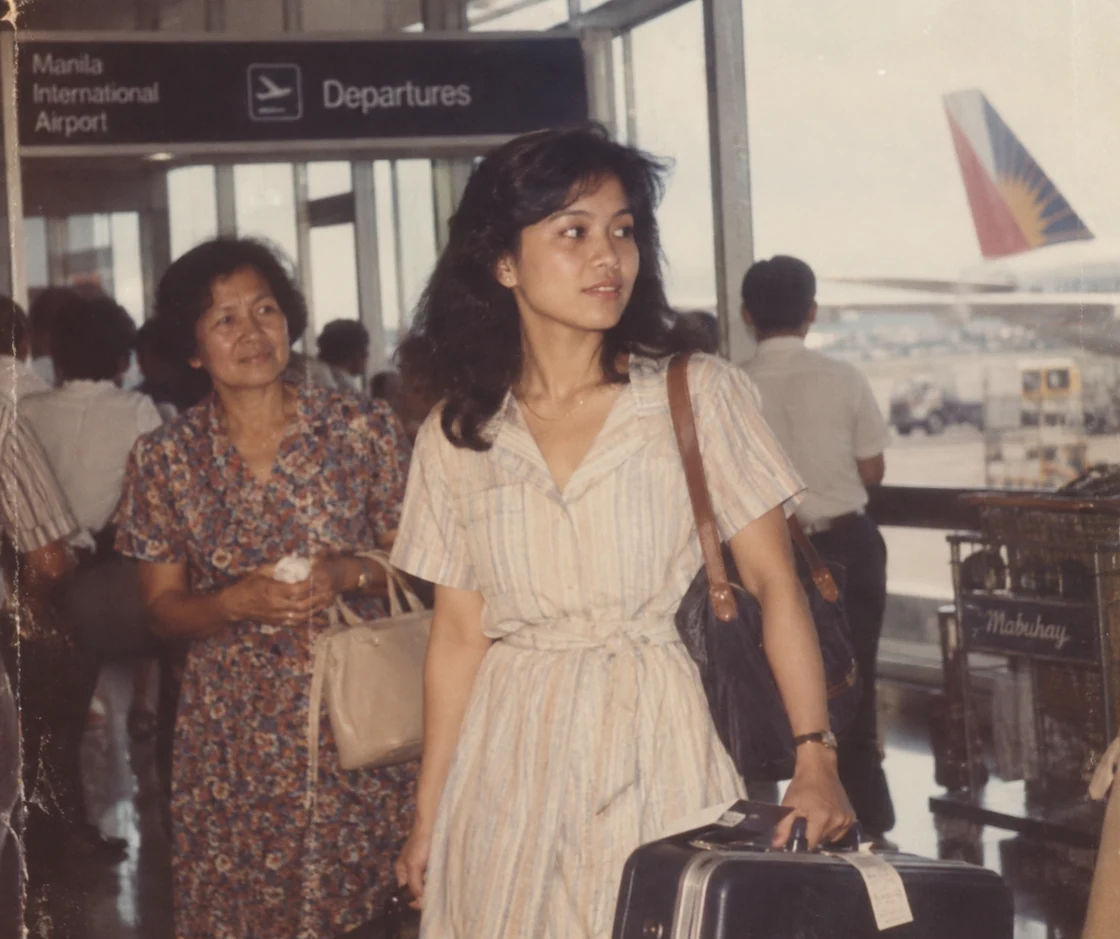
“Before I left the Philippines, I bought one bag of rice. Half was for my parents and half was for me.”Read the story
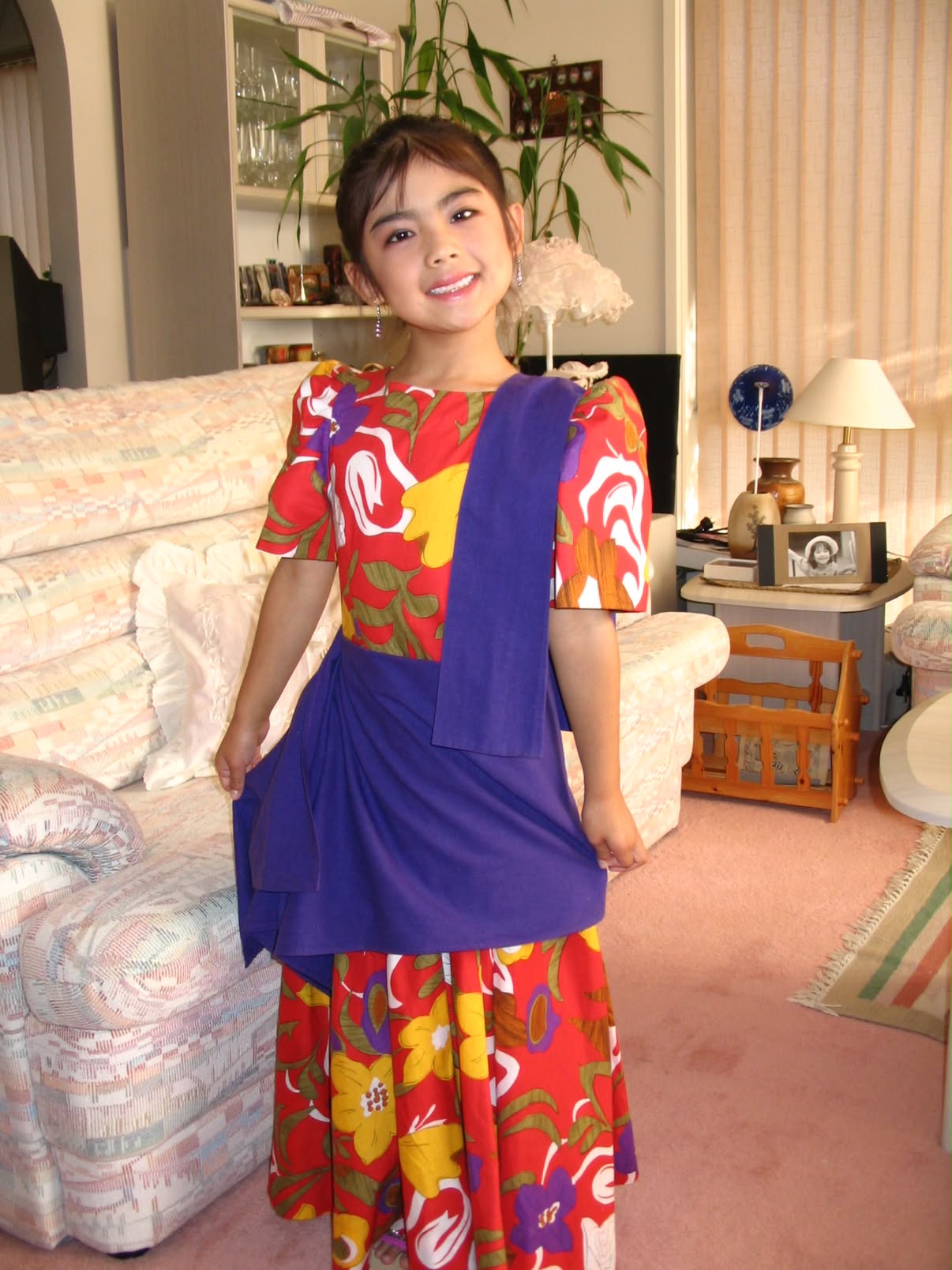
“Things I might have taken for granted as a child now feel like important parts of my heritage that I want to preserve.”Read the story
Choose a thought that stays with you.
Connect
You see yourself in someone else’s experience.
↓You understand something about your own.
↓You realize you’re not alone.
↓You decide what matters enough to keep.
A family ritual, an object or a story repeated across years can hold more than it seems.
Heritage doesn’t always have to be explained. It can be cooked, spoken, photographed, remembered or kept through a gesture.
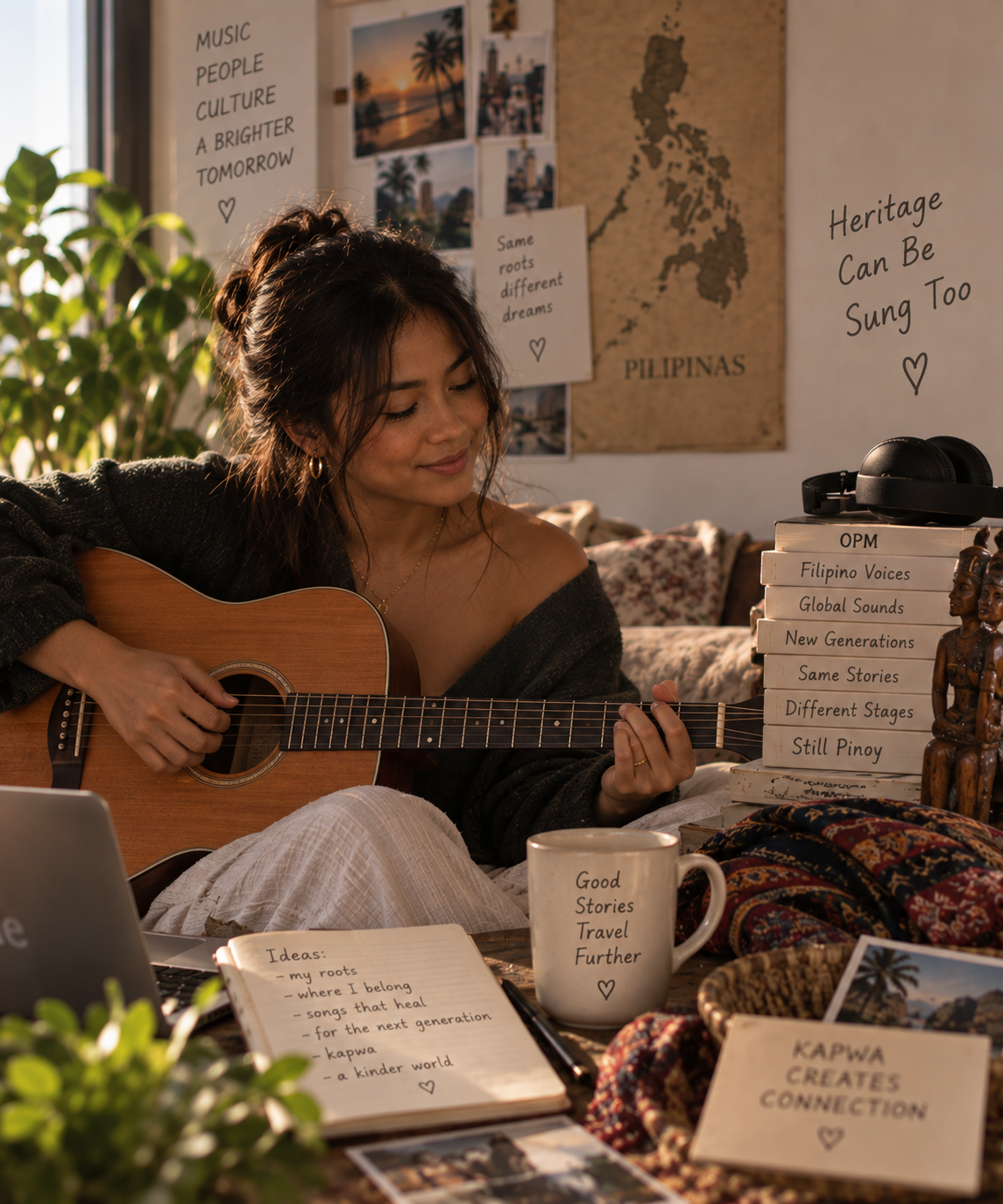
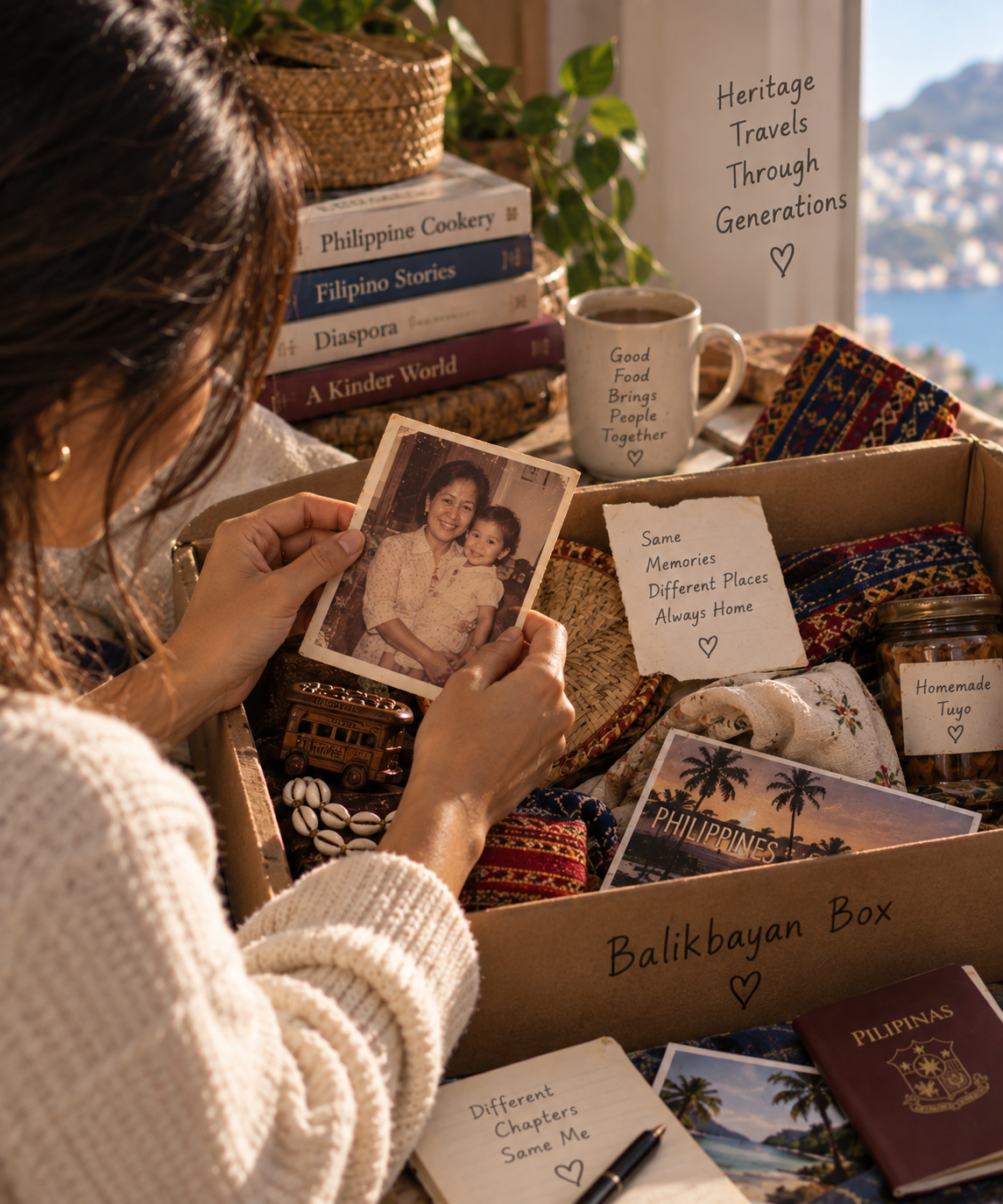
Pamana
“My mother’s recipes.”
“The way we welcome people.”
“A language I’m trying to relearn.”
“What I want my daughter to understand.”
Preserve what matters.Connect what belongs together.Carry it forward.
Connection through shared human experience.
Many ways of living and feeling Filipino.
What we receive, preserve and choose to carry forward.
Kapwa Pinoy Pamana is a living collection of Filipino experiences across generations and borders — not to define what being Filipino should look like, but to make room for the many ways it is actually lived.
Why KPP exists
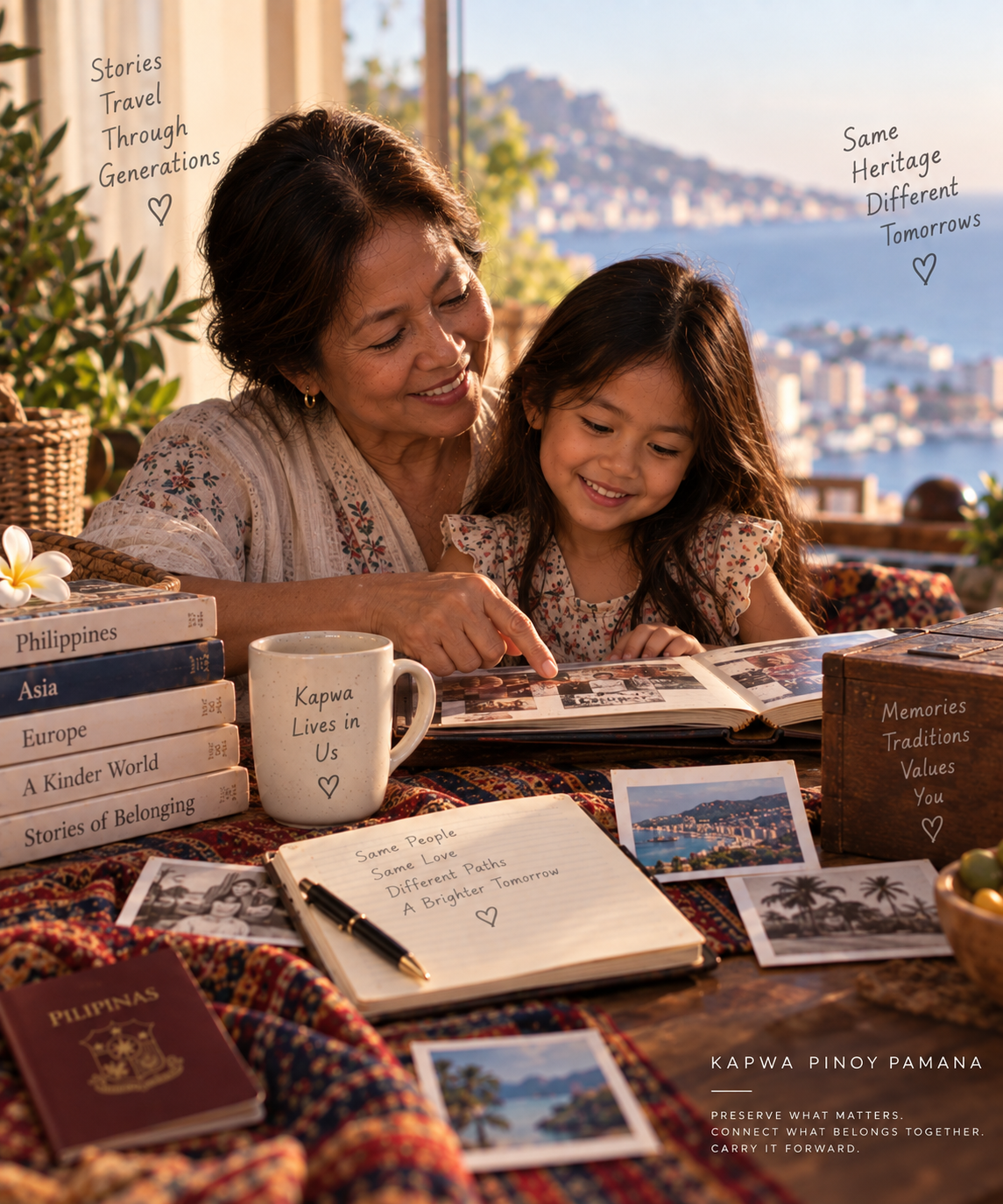
KPP began partly with my mother. For years, she wanted to pass on the story of her life, but there was never quite the right time, space or form. Her Voice became the first way for something long held to finally move forward.
I am a mother too. KPP is part of what I hope to leave my daughter: room to draw strength from every part of who she is — Filipino, mixed, diasporic, European, shaped by family traditions, language and memory — without ever having to prove she is ‘Filipino enough’.
One generation wanted to transmit. The next made a way to carry it. The next will receive it and make it her own.
What in your own life deserves the chance to be carried forward?